
A high school senior with a bright future suddenly vanishes, leaving her family desperate for answers. What happened to Cleashindra Hall?
Episode Media
Episode Sources
- Cleashindra Denise Hall – The Charley Project
- Disappearance of Cleashindra Hall – Wikipedia
- Where is Cleashindra Hall? An Arkansas Mystery
- Police ask for help in Pine Bluff woman’s disappearance
- Honors student leaves doctor’s office, disappears
- Police search home for teen missing since ’94
- New developments in missing person Cleashindra Hall’s case
- Police search home after receiving tip about 1994 cold case
- 40 day wait for crime lab to receive cold case evidence
- Cleashindra Hall family outraged with PBPD over evidence delay
- Pine Bluff police feel heat over handling of cold cases
- No blood evidence on new items in Cleashindra Hall case
- Memory of missing woman sparks inspiration
- Another Mother’s Day Passes as Laurell Hall Searches for Her Daughter Cleashindra
- Hall’s mother pleads for information
- Family of Cleashindra Hall still hopes for answers nearly 30 years after her disappearance
- Pine Bluff mom searches for answers 31 years after daughter’s disappearance
- Unsolved: Cleashindra Hall – Missing
- Find Our Missing Season 2 Episode 8
- Monday Night Mystery: Cleashindra Hall
- Murder Mystery: The Valedictorian
Episode Transcript
Welcome back to Bite-Sized Crime. This week I’m bringing you a cold case out of Arkansas, the story of a young girl who vanished and a family who has never given up. This episode discusses sensitive topics, so listener discretion is advised.
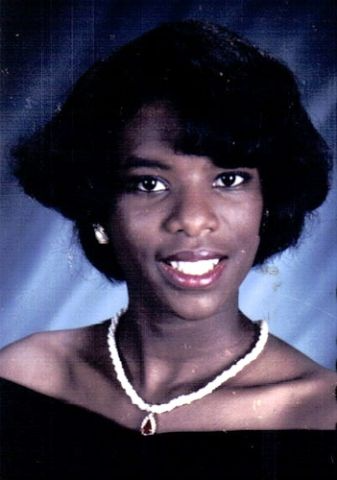
Cleashindra Denise Hall was born and raised in Pine Bluff, Arkansas, a small city on the banks of the Arkansas River, about an hour south of Little Rock. Clea was the second of four siblings and the only girl in her tight-knit family. Her parents, Willie and Laurell, had high expectations for all of their children, and Clea was no exception. Clea worked hard at school and was a natural leader. She volunteered at her church and was especially fond of working in the nursery with the younger children.
In the spring of 1994, 18-year-old Clea was an honor student at Watson Chapel High School and was set to graduate as valedictorian of her class. She was busy writing her commencement speech while also making plans for the summer after graduation. Clea had landed a coveted internship with a pediatrician’s office in Boston and had been accepted into the pre-med program at Tennessee State University for the fall semester. She was so excited about her future and had her family’s unwavering support behind her. Her mother Laurell told Find Our Missing, “She was smart enough to be anything she wanted to be.”
Even with her heavy workload at school, Clea made time for friends and fun. In early May, Clea attended her high school prom, spending hours shopping for her dress and getting her hair and nails done for the occasion. She was happy and thriving, a typical teenage girl on the eve of graduation, ready to launch into the world.
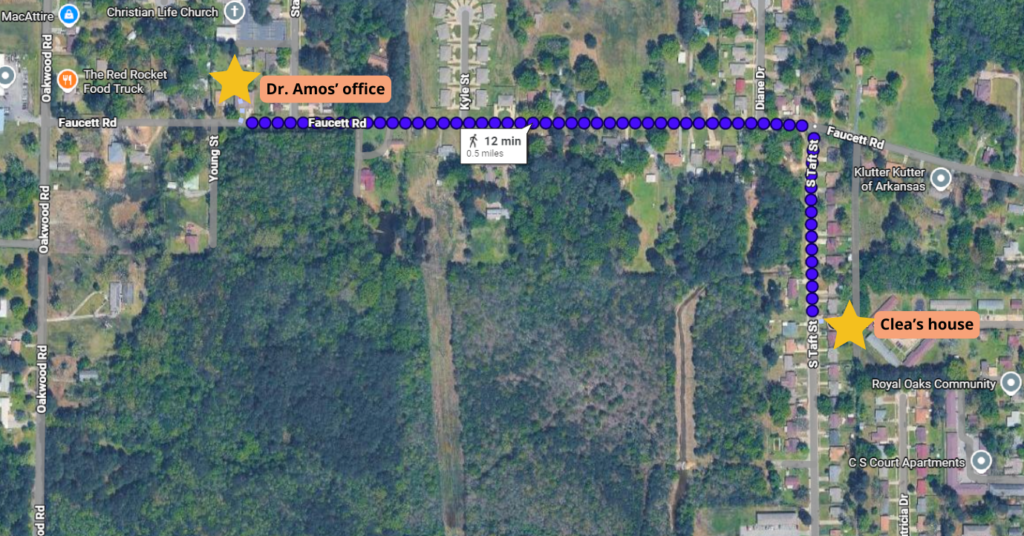
On Monday, May 9, 1994, Clea’s mom Laurell dropped her off at work around 5pm. Clea had been working after school for a local charity that wrote federal grants for day care centers. The program was run by Dr. Larry Amos, a local psychiatrist; he employed several high school students to do clerical work out of his home office on Faucett Road. Clea’s friend Erica had gotten her the job as a way to earn extra money towards her college savings, and Clea enjoyed the work.
As was their routine, Laurell drove Clea to Dr. Amos’ house, even though it was less than a mile from their home on South Taft Street. Clea told her mom that she might work late that night and would call when she was ready to be picked up. At 8pm, Clea called Laurell just to check in and ask if anyone had called for her – Clea didn’t have a cell phone, and it wasn’t out of the ordinary for her to call home and ask for her messages. But Clea didn’t ask her mom to pick her up yet, so Laurell settled herself in bed to wait.
The next thing she knew, her husband Willie was shaking her awake. He had gotten home shortly after midnight after being out with his softball team. When he went around the house to close up for the night, he noticed that Clea wasn’t in her room. Laurell realized that her daughter had never called for a ride.
Immediately, Laurell called Dr. Amos’s house, and he picked up on the first ring. When Laurell asked if Clea was still at the office, Dr. Amos said that she had signed out on her timesheet and had left at 8:30. He assumed that her ride had come to pick her up.
Laurell and Willie tried not to worry. Maybe Clea had decided to go hang out with friends. Laurell later told NCMEC, “I’m thinking, okay, she’s never done this before, but she is a teenager and she’s 18, about to graduate, so maybe she’s decided that she’s gonna flex her independent muscles. But I stayed up all night because I’m looking out the window thinking, ‘You’re going to be in trouble, young lady, when you come home’… Daylight came and she wasn’t at home.”
On Tuesday morning, the family decided to divide and conquer. Clea’s younger brother went to school early to see if she had shown up for band practice, but she wasn’t there. Laurell and Willie drove to the house of Clea’s friend Scott – he was older and had his own car, maybe he had given Clea a ride after work – but Scott didn’t know where she was. They contacted a few more friends, but no one had seen Clea. By 9am, they decided to call the police.
But the Pine Bluff Police Department told Clea’s parents that they had to wait 24 hours before they could file a missing persons report. She was legally an adult – surely she had just gone out with friends and would wander home soon. Laurell and Willie knew better. That kind of thing was so far out of character for Clea; she never would have left her family wondering where she was or if she was safe.
Clea’s parents waited until the 24-hour mark – 5pm on Tuesday, March 10th – then filed the report. However, Pine Bluff police still didn’t seem to be in a hurry to investigate. They put out a BOLO with Clea’s description, but detectives didn’t meet with Laurell and Willie until March 11th. Laurell told CNN, “It’s been very frustrating for us. We feel that police didn’t do everything they could have done at the beginning, when she first went missing.”
Of course, Clea’s family wasn’t going to wait for police to act. They reached out to local news stations and printed flyers to hang around town. They organized their own search of the wooded area across from Dr. Amos’ office. It would be several days before police joined the search.
When police finally did get around to investigating, they turned their attention to Clea’s friend Scott. Scott was several years older than Clea and in the Army Reserves. A friend had introduced them a few months earlier, and Scott and Clea had become close. Investigators wondered if Scott knew more than he was saying. They obtained permission to search Scott’s house and car, and Scott agreed to take a polygraph exam. But in the end, there was no evidence that Scott had been involved with Clea’s disappearance.
Investigators then turned to Dr. Larry Amos. Clea had last been seen at his home office, and there were several witnesses who could place her there. Clea’s friend Erica told investigators that around 8:00 on March 9th, she had asked Clea if she needed a ride home after work. According to Erica, Clea said she was just going to walk home. At the time, Erica hadn’t thought much of it – even though Clea always got a ride from her mom, deciding to walk the short distance home wasn’t the craziest idea.
When investigators finally got around to contacting Dr. Amos, he was out of town. According to Dateline, Dr. Amos had left the state the day after Clea disappeared, claiming it was a pre-arranged business trip. Two weeks passed before investigators interviewed Dr. Amos, and when they did, he told them the same story he had told Clea’s parents – she had clocked out at 8:30pm and had seemingly gotten a ride from someone.
At first, Dr. Amos told investigators that they could search his home when he returned from his trip, but he later changed his mind, only allowing them access to his office and not the entire house. He also refused to take a polygraph exam.
Clea’s family was beyond frustrated with the lack of progress. Laurell later told CNN, “I don’t understand why police could not search the home immediately to make sure there was no sign of a struggle there. Maybe they would have found her press-on nails or hair extensions there; who knows?”
Police did get phone records from Dr. Amos’ office, but they would not say whether or not the information led anywhere. Of course, the technology available in 1994 was nowhere near as sophisticated as it is today, and it’s unclear whether or not police would have been able to get much useful information.
Sadly, it didn’t take long for Clea’s case to go cold. Investigators followed up on leads as they came in, but those were few and far between. Lt. Terry Hopson told CNN that the department was working diligently on the case, but he couldn’t offer much information. All he would say was, “We do believe she left that house that night with someone she was acquainted with.”
In 2012, 18 years after Clea disappeared, police received a tip from a man who claimed to have done construction work for Dr. Larry Amos back in the 1990s. According to court documents, the man said he had noticed blood inside the house, “like it had been splattered on the insulation.”
The documents also revealed that another man had been hired to fill a large hole in Dr. Amos’ backyard around the same time. He told police that when the wind blew, he could, “smell an odor unlike anything he has smelled before.”
With this information, police obtained a search warrant for Dr. Amos’ house on Faucett Road. Forensic teams brought ground penetrating radar equipment and cadaver dogs to search the property. News stations reported that the Pine Bluff Police Chief and the Jefferson County District Attorney entered the house and removed several brown paper bags, presumably with potential evidence.
But according to KTHV, Dr. Amos hadn’t lived in that house since 1996 when he started a remodeling project that apparently had lasted over a decade. Officers told their reporters that Dr. Amos planned to move back into the house after the remodel was complete, but I can’t help wondering what evidence, if any, would still be around after all those years.
To add insult to injury, the evidence that was collected was mishandled by the Pine Bluff Police Department. According to multiple news outlets, the police chief did not turn the evidence over to the crime lab within 24 hours as is standard protocol. Instead, the evidence was handed to a detective who placed it in the trunk of his car, claiming that the large media presence outside Dr. Amos’ house at the time of the search impeded their normal procedure. The evidence allegedly sat in the detective’s car overnight before making it back to the police station. A police spokesperson told FOX16 that the police chief assumed the evidence had been sent to the lab, but a miscommunication led to the evidence sitting in storage for 40 days. If Clea’s family hadn’t kept following up on the progress of the investigation, it likely would have sat there for much longer.
Ultimately, the items taken from Dr. Amos’ home were tested but did not reveal any presence of blood. Clea’s case went back on the shelf, leaving many questions unanswered. Had something sinister happened at Dr. Amos’ house that night in 1994? Had Clea gotten a ride from someone she knew, someone with bad intentions? Had she decided to walk home in the dark and fallen victim to an unknown predator? Or did she choose to walk away from her life altogether?
As the years have passed, Clea’s family has worked together to honor her memory. They started a scholarship fund in her name, raising money for high school students who wanted to study medicine. They get together every year on Clea’s birthday and on the anniversary of her disappearance to release balloons and remind the world that they are still searching. Laurell told NCMEC, “[Clea] was somebody that had a light that meant something. She had goals and she had dreams just like everybody else. And our family had dreams and goals for her, too. And so somewhere we’re missing out on seeing what our life could have been.”
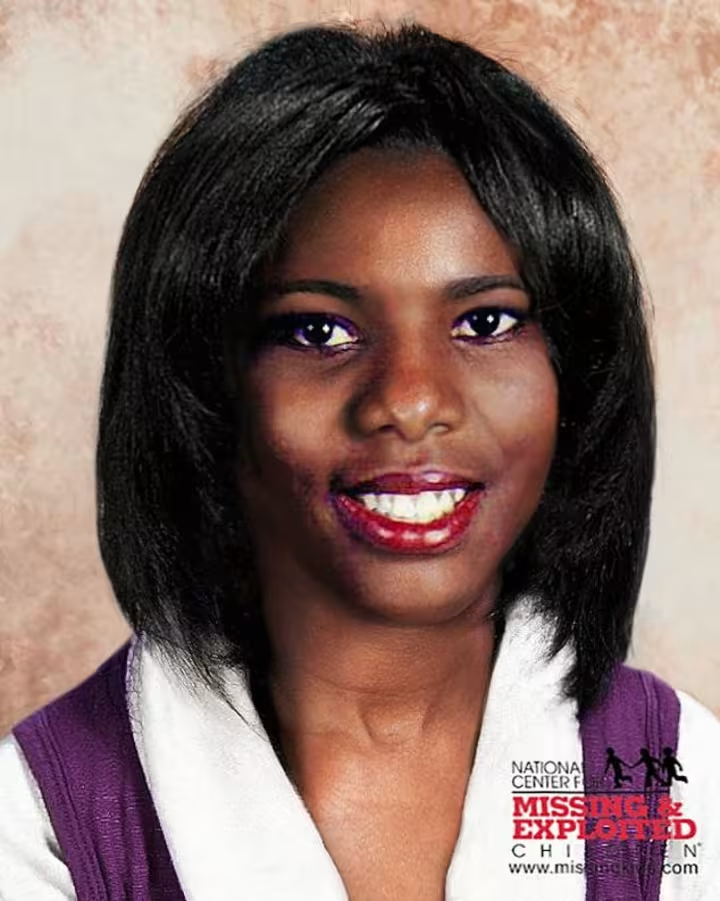
As of this recording, Cleashindra Hall has been missing for 31 years. Her family is holding out hope that she is still alive. Laurell told the Associated Press, “I’m going to believe that until I find out differently.”
If you have any information about the 1994 disappearance of Cleashindra Denise Hall, please contact the Pine Bluff Police Department in Arkansas at (870) 541-5300.