
When a young woman disappears on her way home, the only clue is a haunting 911 call. Her family is left wondering — what happened to Alyssa McLemore?
Episode Media
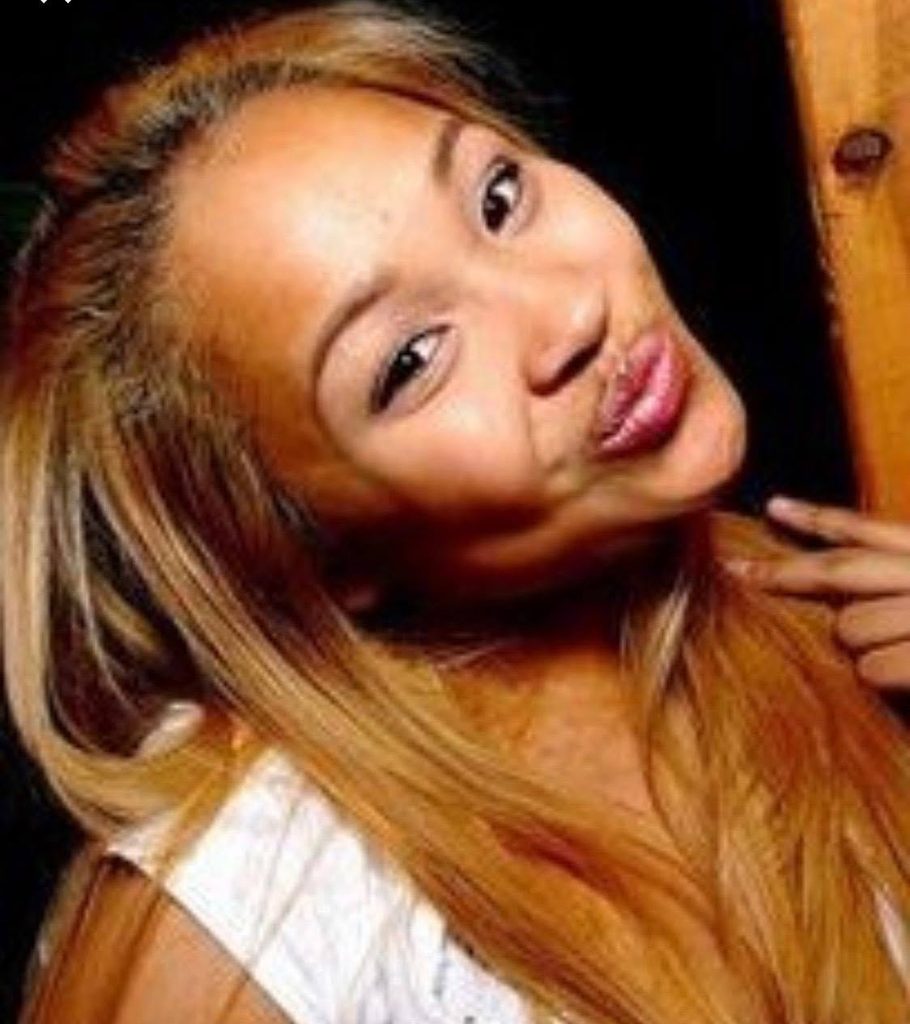
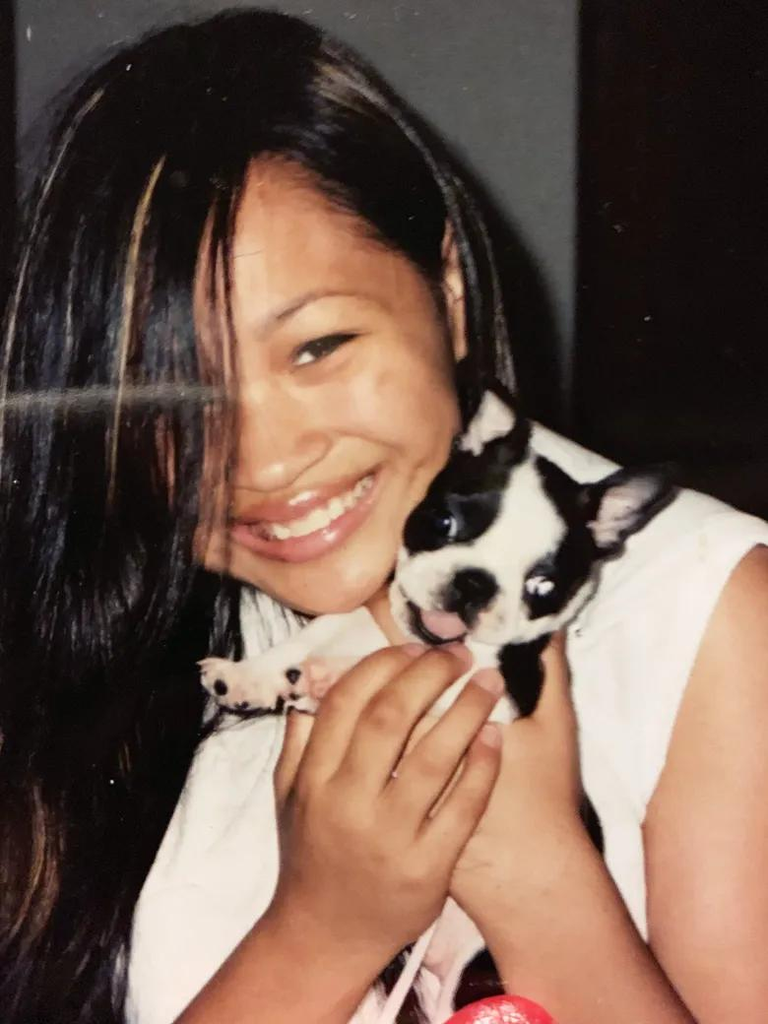
Episode Sources
- Alyssa Angelique McLemore – The Charley Project
- Missing Person / NamUs #MP9695 Alyssa Angelique McLemore
- Alyssa Angelique McLemore – The Doe Network
- Missing Alyssa McLemore – Facebook
- Petition – Demand Kent Police Department to Release Alyssa McLemore’s Missing 911 Call
- Kent resident Alyssa A. McLemore reported missing
- ‘I just want closure’: Friend of missing Kent woman Alyssa McLemore refuses to give up the search
- Missing: Still no answers about Kent woman 3 years after disappearance
- Kent Police seek public’s help about the disappearance of Alyssa McLemore 10 years ago
- A Kent woman called 911, then disappeared. That was 10 years ago. Her family and police want to find her.
- Family of missing Kent mother not giving up hope 10 years after her disappearance
- Why are Native American women so much more likely to disappear or be killed?
- ‘Sister, where did you go?’: the Native American women disappearing from US cities
- ‘Please help find me’: Photos of missing Kent woman to hit states’ highways
- New WSP Homeward Bound Truck Features Alyssa McLemore
- Ten years after she called 911 and vanished, Alyssa McLemore’s family is still hopeful for answers
- Family searching for Kent woman who disappeared after haunting 911 call
- Kent Police seek public’s help to find woman missing since 2009
Episode Transcript
Welcome back to Bite-Sized Crime. This week I’m bringing you a case that was recommended to me by a commenter on the podcast’s YouTube channel, so thank you to Jaela for bringing Alyssa’s story to my attention. This episode discusses sensitive topics, so listener discretion is advised.
Sisters Gracie and Tina McLemore grew up near Seattle, Washington, in the 1970s. Just two years apart, Gracie and Tina were very close. Growing up under the shadow of alcoholism and domestic violence, the sisters leaned on each other for support.
Gracie was just 13 years old when she learned she was pregnant, and in the summer of 1987, at the age of 14, she gave birth to a beautiful baby girl she named Alyssa Angelique. Tina, who was 16, gave birth to her own daughter just a few months later. Together, Gracie and Tina raised their daughters, determined to give them a better life. Their mother Barbara worked multiple jobs to pay the bills for the growing family.
Gracie eventually went on to earn her GED and attend community college, but when she was unexpectedly diagnosed with a rare autoimmune disease, her dreams were put on hold. Living with chronic pain was difficult, but Gracie found joy in her young daughter. Alyssa was bright and bold, a vivacious girl who loved dancing and roller skating.
As a teenager, Alyssa struggled in school, and she ended up dropping out of Kent-Meridian High School in her sophomore year. When she was 18, Alyssa gave birth to a daughter, and she experienced the same joy of motherhood that Gracie had found with her. Her friend Erin told KING5 that Alyssa was an amazing mom. “She glowed. It was just like this happy ball of energy.”
In the spring of 2009, 21-year-old Alyssa and her 3-year-old daughter were living with Gracie and Barbara on the East Hill of Kent, Washington. Gracie’s health was in serious decline, and Alyssa had stepped into the role of caretaker. Because of this, Alyssa wasn’t working a full-time job, and she sometimes turned to sex work to make money. She had been arrested a few times for prostitution-related offenses, but all the charges had been dropped. Alyssa was also sharing custody of her daughter with her ex-boyfriend, which was a complicated situation. It was a difficult time for the entire family.
On April 9, 2009, Barbara called Alyssa’s cell phone around 6:30pm. Gracie wasn’t doing well, and Barbara feared that she would pass soon. She asked Alyssa to come right home, and Alyssa said she would. She was only a few miles away; she would catch the next bus.
But hours passed, and Alyssa didn’t come home. Barbara tried calling her cell phone again, but there was no answer. Barbara was surprised and slightly worried – Alyssa knew the urgency of the situation, so where was she?
There is some conflicting information about the events that followed. Some sources say that Alyssa’s cell phone made a 911 call at 9:15pm on April 9th, just hours after she spoke with Barbara, while others say the call occurred on the night of April 10th. The dispatcher who took the call said they heard a woman on the line asking for help. A man’s voice was heard in the background telling the woman he was going to kill her. A few seconds later, the call abruptly ended.
The phone that made the call did not have GPS capabilities, so the dispatcher could not determine the exact location where the call was made. However, although the caller had not identified themselves, the phone number was registered to Alyssa McLemore of Kent, Washington.
Again, there is conflicting information here. Some reports state that police were not notified of the 911 call until the following day, which would be against protocol for 911 dispatchers fielding a call of this nature. Other reports state that police followed up on the call immediately. We do know that two officers from the Kent Police Department knocked on Barbara’s door and asked if Alyssa was home. They believed she had made a troubling 911 call, and they wanted to make sure she was safe. Barbara told them that she had been trying to get in touch with her granddaughter for hours, but she wasn’t answering her phone.
Inexplicably, even with the alarming 911 call and the fact that Alyssa’s family couldn’t get in touch with her, the officers told Barbara that she couldn’t file a missing persons report yet. Alyssa was an adult who could leave home whenever she wanted, and she hadn’t committed any crimes. The family just needed to wait and see if she would come home on her own.
Sadly, on April 12th, Alyssa’s mom Gracie passed away at the age of 36. The family had no way of contacting Alyssa to tell her the news, and Gracie’s funeral came and went without any word from her daughter. Her friend Melissa told the Kent Reporter that Alyssa never would have missed her mom’s funeral if she could help it. “I believed Alyssa would walk through the door. She’d have been there.”
Finally, on April 14th, Alyssa McLemore was officially reported as a missing person, and an investigation was opened. But from the beginning, the investigation was fraught with confusion. Alyssa had already been missing for five days, and trying to pinpoint her last location seemed futile. The lack of a GPS sensor on her Blackberry phone made it impossible for police to track, although they were able to narrow down the cell tower it was connected to when she made the 911 call. Unfortunately, it took police weeks to even find that information.
Also, Alyssa’s police file listed her ethnicity as Asian instead of Black and Native American. Alyssa was a descendent of the Aleut tribe, an Indigenous people from the Aleutian Islands in southern Alaska. According to The Guardian, racial misclassification is a common issue in police investigations – especially for Native Americans – and it directly affects the data that is collected by organizations fighting for change. Unfortunately, Alyssa’s police file wouldn’t be corrected for years.
In spite of the roadblocks, investigators were doing what they could to find Alyssa. They collected personal items from her home for DNA samples, and they interviewed her friends and family to try and get a picture of her life and what circles she ran in.
Investigators spoke with two different witnesses who both said they had seen Alyssa shortly before her disappearance. The first witness recalled seeing Alyssa talking with a white man in his 50s or 60s. The witness didn’t know the man’s name but said Alyssa knew him. The witness also said the man drove a green pickup truck.
The second witness’ statement was a bit more detailed. They recalled seeing Alyssa on April 9th, the day she disappeared. The witness told police that a green 1990s-model pickup truck approached Alyssa on the street near Kent Des Moines Road and 30th Avenue South. The witness couldn’t tell who was driving, but they thought the truck might have Oregon license plates.
If the witness was correct, the area Alyssa was last seen was often frequented by sex workers, but it was also right by the Kent Des Moines light rail station. Could Alyssa have been trying to get home to her mother when someone offered her a ride? Was it a customer she had interacted with before?
Kent Police Sgt. Dina Paganucci told the Kent Reporter that it was unclear if the man was related to Alyssa’s disappearance. “We’re trying to figure out who that guy was or even if it was related to her not being here.”
It didn’t take long for the few leads investigators had to dry up completely. But Alyssa’s friends and family weren’t giving up. They held vigils and car washes to raise money for a Crime Stoppers reward fund. Her friend Melissa told the Kent Reporter that she didn’t want people to forget that Alyssa was still missing, that she was loved by so many. “If her daughter looks up information on her mom one day, I want her to know her mom was cared for. She was not someone nobody cared about.”
In 2011, investigators collected DNA from Alyssa’s family and submitted it to NamUs, the National Missing and Unidentified Persons System, in the hopes that it could help them identify Alyssa if she was found. In 2012, Alyssa’s cold case was handed over to Detective Brendan Wales. He told the Seattle Times that he would listen to Alyssa’s 911 call over and over again, hoping he would hear something new. The police department had binders of information on the case, but they were missing something – there had to be an answer somewhere.
As the years passed, Alyssa’s aunt Tina took over the family’s efforts to keep the case alive. She organized searches of parks and nature preserves, and handed out flyers at local businesses and community events. She started a Facebook group to share updates and connected with other families with missing loved ones. Tina also connected with the Missing and Murdered Indigenous Women’s movement, which provided the family with resources and support.
In 2019, on the ten year anniversary of Alyssa’s disappearance, the Kent Police Department made a public plea for tips in Alyssa’s case. “Investigators are seeking to talk to anyone who may have seen something suspicious or possibly observed anything out of the ordinary just prior to Alyssa McLemore’s disappearance.”
Detective Wales told the Seattle Times that he was hoping the anniversary would generate new leads. Perhaps those who had been too afraid to speak ten years ago would be willing to come forward now. “I believe she can be found. Her family is looking for her and from what I’ve gleaned, there’s information out there about Alyssa.”
Tina believed the same thing. She told KIRO7 that someone out there was keeping a secret. “It’s time for you to come forward. It’s time to tell the truth and get it off your conscience… We’re desperate for answers. And by any and all means, we’re going to find them.”
Two months later, the Washington State Patrol announced they were adding Alyssa’s case to Homeward Bound, a program that puts pictures of missing individuals on the sides of commercial semi-trailers. Three trucks would feature Alyssa’s picture, information about her case, and a phone number to call in tips. State Patrol spokeswoman Carri Gordon said, “We want to bring attention to the missing Native American women and children across the country and have her family know we’re not giving up.”
In 2019, the family received a tip that Alyssa’s body was buried in Lake Fenwick Park, a recreation area in the southwest corner of Kent. Tina told KING 5 that when the police didn’t follow up on the tip, the family decided to search the area themselves. “I will not sleep at night if I’ve got one tip that I did not follow up on.”
In the park, they found an old abandoned well loosely covered by leaves and brush. When they looked down into the deep cavern, they saw what appeared to be a blue plastic tarp at the bottom. They reported it to the police, but again, there was no follow-up.
Four years later, in 2023, Tina took a reporter from KING 5 to the park and showed them the well. She was frustrated by investigators’ lack of response to what was clearly an important lead. “I don’t know what’s under there, and my mind will always wonder until somebody does investigate it and say, ‘Nope, she wasn’t there.’… We can’t even get the city she’s missing from to come and even take [it] serious. They’ve never sent a team out here.”
When the reporter asked Detective Wales why they hadn’t investigated the abandoned well, he said that it was miles away from where Alyssa’s cell phone would have been when she made the 911 call, and it came down to time and resources. But the day after the interview, the detective and his partner went to the park to look at the well. He told KING 5 that it would be searched and investigated. If anything ever came of it, it hasn’t been made public.
In 2024, police released an age-progressed forensic sketch of what Alyssa might look like 15 years after her disappearance. In a statement, Kent Police said, “We are asking you to take a look at the sketch, and the photos of Alyssa from around the time of her disappearance, and contact Kent Police if you believe you have even the smallest tip regarding her whereabouts or her disappearance.”
As of this recording, Alyssa McLemore is still missing. Sadly, Barbara passed away in 2025 without ever knowing what happened to her granddaughter. Tina is still leading the family’s campaign to find Alyssa, and they are currently asking the Kent Police Department to release Alyssa’s 911 call. There is a link to their petition in the show notes if you’d like to add your name in support.
Tina told the Seattle Times that they would never give up on finding Alyssa. “If Alyssa could hear us or see us or see anything written about her, I want her to know: we’re coming. We’re doing our best to find her — we’re going to find her, dead or alive. She’s coming home. I can feel it in my bones.”
Alyssa Angelique McLemore was last seen by her family on April 9, 2009, in Kent, Washington. She may have been around the area of Kent Des Moines Station, possibly talking to someone driving a green 1990s-model pickup truck. Alyssa is described as a Black and Native American biracial woman with brown eyes and black hair possibly dyed blond. At the time of her disappearance, Alyssa was 21 years old; she would be 39 today.
If you have any information about the disappearance or current whereabouts of Alyssa McLemore, please contact the Kent Police Department at 253-856-5800. And please share Alyssa’s story. Let’s bring her home.