
When a young Indigenous teen disappears from the Pacific Northwest, it takes months for an investigation to begin. Where is Kit Mora?
Episode Media
Episode Sources
- Esmerelda C. Mora – The Charley Project
- NamUs #MP96208 Esmerelda C. Mora
- Finding Kit: The Documentary Film
- Finding Kit | Facebook
- Petition · Request FBIs assistance in “Finding Kit” Esmerelda Mora
- Non-binary, Indigenous, Latino… Esmerelda ‘Kit’ Mora’s family refuse to let her fall through the cracks post-disappearance
- Missing Omak teen with ties to Yakima added to WSP’s list of missing Indigenous people
- Family, friends hold vigil for missing Omak teen with ties to Yakima
- ‘It hurts to talk about it’: Family, Omak Police asking for tips on teenager’s suspicious disappearance
- $10,000 reward for tip that leads to missing Omak teen’s whereabouts rekindles hope
- How the case of a missing Indigenous teen fell through the cracks
- Where is Kit Mora? Loved ones push for justice and answers more than 3 years after the Washington state teen was last seen
Episode Transcript
Welcome back to Bite-Sized Crime. This week I’m bringing you a case from the Pacific Northwest, the story of a young teen who went missing and a family who is desperate to bring them home. This episode discusses sensitive topics, so listener discretion is advised.
Esmerelda Nelson-Mora was born in April of 2005 in Spokane, Washington. The third child born to Lorie Sue Nelson, Esmerelda’s early childhood was marred by abuse. Lorie’s oldest daughter Maliyah has alleged that Lorie neglected her children and was physically violent towards them. There were multiple occasions when agents from Child Protective Services came to the home and the children were temporarily removed and placed in foster care. Lorie eventually lost custody of her three oldest children.
In 2009, four-year-old Esmerelda was taken in by her paternal great-grandparents, Bonnie and Charlie Groo. They were able to get third-party custody, and Esmerelda finally had a home that was stable and safe.
Now growing up in Washington’s Yakima Valley, Esmerelda bloomed. Curious and creative, Esmerelda loved to draw and would spend hours doodling in notebooks and listening to music.
In high school, Esmerelda came out as nonbinary, revealing this part of themselves to their closest friends and family members. They chose the name Kit, and everyone agreed it was a perfect match to their personality.
Kit also started to explore their Indigenous heritage. Lorie’s side of the family had ancestral ties to the Okanagan Nation of British Columbia. Kit’s adoptive sister Charlotte told Dateline, “[Kit] loved learning new things about different tribes and different traditions.”
Even though Kit’s home life was now stable, the abusive environment of their early years left them with invisible scars, and they struggled with anxiety and post-traumatic stress. Combined with the struggles of high school and teenage angst, Kit’s mental health was a constant battle, and they often found comfort in their art. Their friends and family members were supportive, encouraging Kit’s pursuits and giving them a safe place to land.
But in 2021, everything changed when Lorie came back into Kit’s life. At first, sixteen-year-old Kit was hesitant to trust their mother, but Lorie was persuasive. Lorie and her boyfriend visited Kit in Yakima – they had four young children, siblings Kit had never met before, and they painted a picture of a happy family. Kit started to hope that Lorie had changed, that maybe they could be a part of their mother’s life again.
In April of 2021, Kit’s older brother Javonte passed away, and Kit was devastated. Their family believes this tragedy was the catalyst that drove Kit back into Lorie’s arms. In June, Kit decided to visit Lorie in Omak, a small town 200 miles north of Yakima. Everyone was under the impression that it would be a short visit, but after a week, Kit called home and told the family that they wanted to stay. Bonnie and Charlie weren’t thrilled, but Kit seemed happy, so they agreed that Kit could stay in Omak with Lorie as long as they enrolled in school for the following year.
Kit settled into life in Omak, working in Lorie’s secondhand thrift shop. In the fall, they enrolled at Omak High School where they had the opportunity to be an assistant to the school’s art teacher. On the surface, everything seemed great. But Kit’s messages to friends back home indicated that things at Lorie’s house weren’t going well. Kit felt like Lorie was just using them as a free babysitter. One message to a friend read, “My mom cried to me yesterday being all like ‘we care about you, what if your sisters will need you? What if you’ll need to be their parent.’ And how she ‘wouldn’t let me go without a fight now that she has me.’”
Kit’s friends also noticed that Kit had begun dressing in ways that seemed out of character. Pictures showed Kit wearing flowery dresses and sporting a more feminine haircut, vastly different from their typically androgynous style. In August, Kit posted on Twitter about Lorie not supporting their identity. “That moment when the few good things you had to say about your mom is no longer there. She says she accepts me, that my ‘family’ here ‘accepts me,’ but her actions say otherwise.”
As summer turned into fall, Kit’s messages home grew less and less frequent. Their best friend Amythist told Dateline, “We went from talking almost every day to every other day, to once a week, to once every couple weeks, and then once a month. And I was like, ‘I miss you. I miss my friend.’”
Amythist recalled Kit expressing their exhaustion and frustration with life in Omak, but when she asked Kit to come back to Yakima, Kit said they had to stay and take care of their younger siblings.
Kit’s sister Charlotte also noticed that Kit’s messages seemed more melancholy, slowing down before eventually stopping altogether. Charlotte felt strongly that something wasn’t right, but she didn’t know what to do. Her counselor suggested calling the Omak police and requesting a welfare check. On November 28, 2021, an officer knocked on Lorie’s door. He reported that he made contact with Kit and confirmed that they were safe. The incident was closed and no report was filed.
But even with this update, Kit’s family didn’t feel reassured. Kit wasn’t posting on social media anymore, and they weren’t responding to messages. Had Lorie taken their phone away? Why weren’t they reaching out? Was it really Kit who had spoken to the officer that day?
Kit’s family had no idea that the police had been called to Lorie’s home multiple times over the past few months. In fact, officers had been dispatched for a domestic dispute just five days before the welfare check on Kit. Two days after the welfare check, Lorie’s boyfriend was arrested for assault after allegedly hitting her with a baby gate. But according to PBS, none of the police reports mentioned Kit at all.
Not only had Kit’s messages stopped, they had stopped going to school. In January, Omak High School dropped Kit from enrollment because of truancy – Kit had 33 days of unexcused absences. No one informed Bonnie and Charlie.
In June of 2022, Child Protective Services were called to Lorie’s home yet again. They found Lorie’s four youngest children in a state that clearly indicated they were being neglected and abused. The children were taken to the hospital for medical care but were later returned to Lorie with no charges filed. Again, there was no record of Kit being in the home. Sadly, Kit’s family had no idea that any of this was happening.
It wasn’t until September of 2022 that the truth started to come to light. Frustrated and concerned with the lack of contact from Kit, Amythist reached out to Kit’s sister Charlotte asking if she had heard from Kit. When they both realized that neither of them had heard from Kit in nearly a year, panic set in. They had to do something.
Amythist convinced her grandmother to drive her to Omak to look for Kit. Surely if she could just make contact with her best friend, everything would be alright.
At the Omak Police Department, Amythist told them that she was concerned for Kit’s safety, so an officer went to Lorie’s apartment to perform a welfare check. Lorie told the officer that Kit had run away back in April – Lorie assumed they had gone back to Yakima.
When the officer relayed this news to Amythist, she couldn’t believe it. Kit would never run off without telling someone. And even if they did, why hadn’t Lorie reported them missing? No one had been looking for Kit for months – they could be anywhere by now.
Amythist started reaching out to all of Kit’s friends on social media. Several Omak High School students told Amythist that Kit’s attendance had always been spotty, but they hadn’t returned to school at all after winter break. It appeared that no one had heard from Kit since November of 2021.
When Amythist told Kit’s family what she’d learned, they jumped into action. But when they tried to file a missing persons report with the Omak Police Department, they were told that Kit was just a runaway. The family even reached out to the Colville Tribal Police, since Lorie’s apartment was close to the reservation, but they were given the run-around and nothing was done. Finally, in October of 2022, the Washington State Patrol activated a Missing Indigenous Person Alert for Kit, but even then, Omak police didn’t investigate. Detective Brien Bowling told PBS, “A runaway juvenile is not a crime.”
Kit’s family refused to give up. They hung flyers around Omak and brought friends along to search the area around Lorie’s apartment, including the Okanogan River. But they were already months behind. Amythist told Dateline, “I feel like by the time that they had started searching, it was too late.”
In January of 2023, after months of advocacy by Kit’s friends and family, the Omak Police Department finally agreed to open an investigation into Kit’s disappearance. But the small town only had one detective and limited resources. It would be an uphill battle.
During the course of the investigation, Detective Bowling received a tip that Lorie and her boyfriend had left Omak just a few weeks after police had knocked on their door asking about Kit. They had moved out in the middle of the night, taking their four small children and leaving most of their belongings behind in the apartment. Police sent several items from the apartment for forensic testing, including a mattress that appeared to have bloodstains, but nothing came of it. Bowling told PBS that they had even sent cadaver dogs to search several locations based on tips they received, but in the end, there was no evidence to be found.
In August of 2024, the Omak Police Department announced that it was partnering with Washington State’s Murdered and Missing Indigenous Women and People Cold Case Unit. As a part of this partnership, a search warrant was executed on a residence in Omak. The police department would not give any more information, saying only that they were deeply committed to finding answers in Kit’s disappearance. Unfortunately, there have been no official updates since then.
In April of 2025, Kit’s family gave an interview to Dateline in which they expressed their frustration with the slow progress of the investigation. Charlotte spoke about the many hurdles they have to overcome to get answers. “Kit has a lot of things against them. Kit is Indigenous. Kit is non-binary. Kit is a teen that was labeled as a runaway. If they were someone else that wasn’t all of those things, I feel like their case would have blown up.”
This is a reality that is all too common for Indigenous families with missing loved ones. In 2024, Washington State ranked second highest in the nation in cases of missing and murdered Indigenous people. Kit is one of hundreds in the state whose family does not have answers.
As of this recording, Kit Mora has been missing for over four years. Their family believes it is not too late to get justice. Charlotte told Dateline, “I want people to know that regardless of anything – regardless of what anybody believes, how they feel about how Kit identifies, Kit matters. Kit is an important person. Kit deserves peace. Kit deserves justice.”
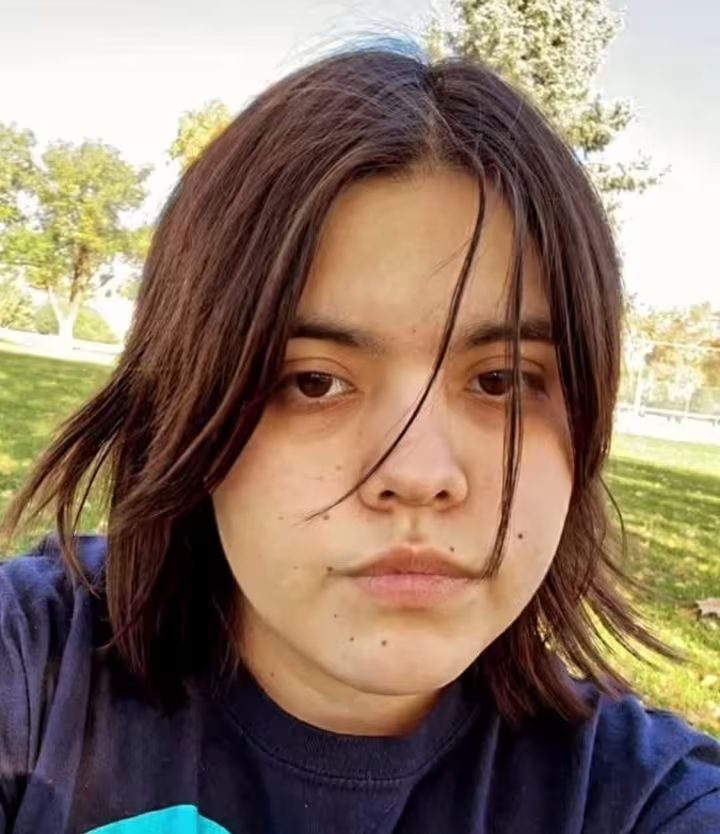
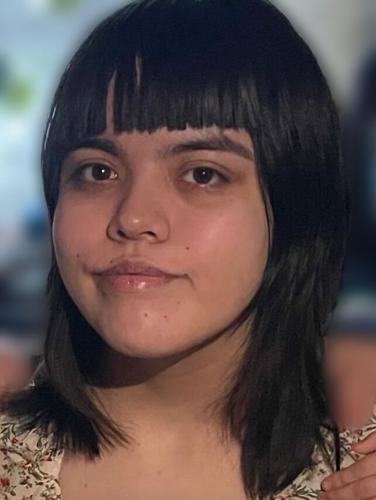
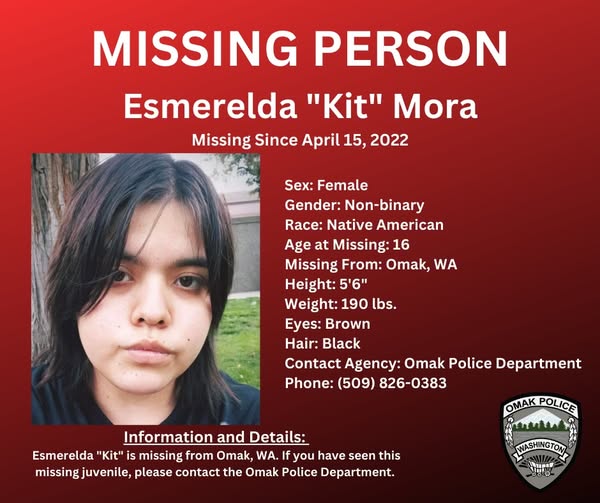
Esmerelda “Kit” Nelson-Mora was last in contact with their family in November of 2021. At the time of their disappearance, Kit was living in the Stampede Apartments in Omak, Washington. They are described as a nonbinary teen of Hispanic and Native American heritage. They stand 5’6” tall and have brown eyes and black hair. Kit has a small scar under their left eye.
If you have any information about the disappearance of Kit Mora, please contact the Omak Police Department at 509-826-0383 or the Washington State Attorney General’s Office MMIP Cold Case Unit at 844-770-7900. There is a $10,000 reward for information leading to Kit’s whereabouts.
If you or someone you know is struggling with mental health or emotional distress, please contact the 988 Lifeline to talk to someone who cares. Call or text 988 from any cell phone, or chat with a counselor online at 988lifeline.org. Help is available 24/7.