
When a woman on the verge of a new life suddenly vanishes, the only witness is her 10-year-old daughter. What happened to Camisha Hollis?
Episode Media
Episode Sources
- Camisha Nicole Hollis – The Charley Project
- Endangered Missing Advisory issued for Omaha woman
- Omaha police jail boyfriend of missing woman
- Homicide detectives now leading search for missing woman
- Marvin Young gets bond set at $500,000
- Omaha Police locate missing woman’s vehicle
- Omaha police find car of missing woman; search for body to resume tomorrow
- Police: Missing woman’s vehicle located, processed by forensic investigators
- Disappearance of daughters bring two moms together
- Search party canvasses neighborhood for missing Omaha mother; car found at hotel
- Search for Camisha Hollis: OPD releases vehicle details, requests video
- Camisha Hollis prayer vigil
- Search for Camisha Hollis continues Friday – Omaha
- Family describes missing Omaha woman as hardworking and doting — in past tense
- Renewed search for missing woman comes up empty
- Search for Camisha Hollis continues
- Family and friends continue search for missing woman
- Partner of missing Omaha woman to stand trial on child abuse charges
- Camisha Hollis search: FBI now assisting OPD
- Family works to keep missing woman’s story alive
- Omaha families in search of justice for lost loved ones
- Omaha police reclassify Camisha Hollis case as homicide
- Boyfriend of Camisha Hollis will stand trial for child abuse charges
- Daughter of missing mother: ‘No more pain, no more abuse and you’ve been set free”
- Suspect booked for the murder of Camisha Hollis
- Update: Missing Adult Investigation – Omaha Police Department
- Prosecutors say Omaha woman who’s missing and presumed dead had been abused for years
- Camisha Hollis murder suspect pleads ‘no contest’ to reduced charges
- ‘He doesn’t have power over us’: Mother of Camisha Hollis shocked by manslaughter plea deal
- Man who killed Omaha mom sentenced to 23 years, body still missing
- Omaha man sentenced for manslaughter in death of Camisha Hollis
- Camisha Hollis, Omaha woman missing since 2018, declared dead
- I Be Black Girl launches missing persons campaign
- North Omaha group launches ‘Bring Her Home’ campaign for missing Black women and children
Episode Transcript
Welcome back to Bite-Sized Crime. This week I’m bringing you the story of a woman who wanted more for herself and her children, and the story of a family who fought for justice. This episode discusses sensitive topics, so listener discretion is advised.
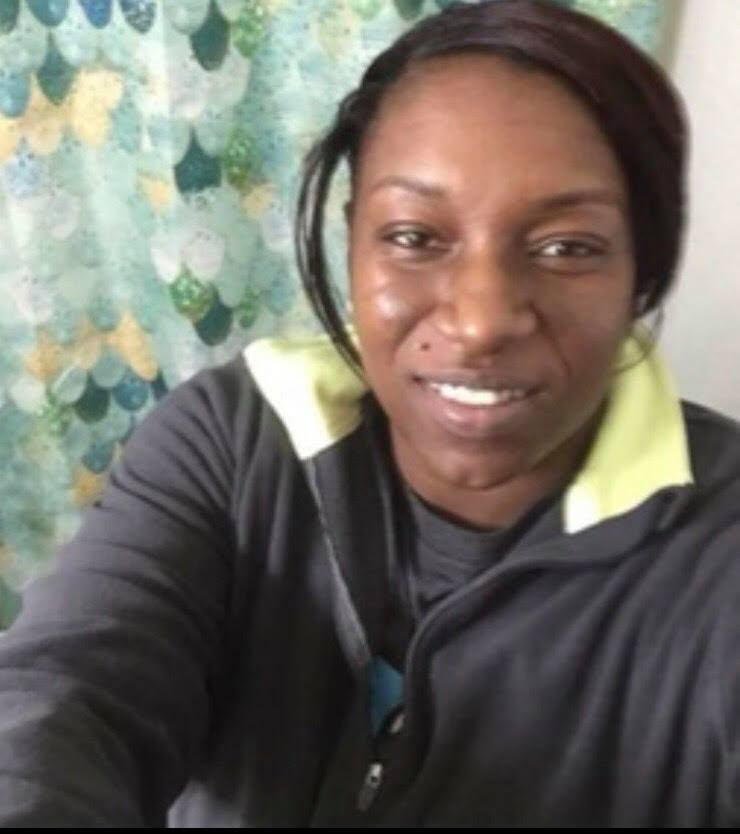
Camisha Nicole Hollis was born in 1983 in small-town Louisiana. When she was six, her family moved north to Omaha, Nebraska, a large city on the banks of the Missouri River. Camisha and her younger siblings grew up in a loving environment surrounded by aunts and uncles and cousins. Camisha’s mother Martha described her eldest daughter as a fun girl who loved life.
In high school, Camisha started dating Marvin Young. Marvin was two years older than Camisha, and she found him to be exciting and charismatic. Camisha graduated from Northwest High School in 2001, and she and Marvin stayed together. Camisha wanted to build a life with him.
Around 2008, Camisha gave birth to a baby girl, followed by a second daughter in 2010 and a third in 2012. Camisha loved being a mother and doted on her girls. Her mother Martha told the Omaha World-Herald, “Those kids never went hungry. Those kids never went without clothes. They made every doctor’s appointment, every dentist’s appointment, every school function they had… she didn’t miss. She was the greatest mom, and I used to tell her that all the time.”
As the years passed, Camisha watched her daughters grow even as she was growing herself. She took online classes at the University of Phoenix to study information technology, and she landed a job working in quality control at a pharmaceutical company. She carved out time in her busy schedule to go to the gym and spend time with friends. She talked to her mom and sister multiple times a day, leaning on them for support and offering it to them as well. Her sister Caprice told the World-Herald, “[Camisha] is a genuinely nice person. She’s someone you want to be around.”
On the outside, Camisha was happy and outgoing, a devoted mother who worked hard to support her family. But behind closed doors, a dark shadow hung overhead. Martha cared for Camisha’s children on the weekend, and they would tell her about explosive fights and violence in their home. They said that their father would beat their mother and had once pushed her down the stairs. Camisha sometimes had cuts and bruises that she would try to explain away.
Martha was worried about her daughter’s safety and that of her grandchildren. She saw how controlling and manipulative Marvin was, and she begged Camisha to leave him. She even talked to relatives back in Louisiana who offered to give Camisha and the girls a place to live. Martha told the World-Herald, “I had to go to Camisha’s rescue a lot. I said, ‘Camisha, what’s it going to take for you to turn this man in or get away from him?’”
In the spring of 2018, it seemed that Camisha had finally reached her breaking point. She had been a victim of Marvin’s abuse for nearly two decades, and she couldn’t do it anymore. She wanted to protect her children and start a new life away from the violence. At the end of March, she told her mom that she was ready. She talked to the landlord about keeping the lease on their house, and she told Marvin that he needed to move out by April 1st. Camisha was done.
On Sunday, April 1st, Camisha and the girls attended a family gathering to celebrate Easter. It was a wonderful time filled with food and laughter. Afterward, Camisha said goodbye and took her daughters home; they had school the next day. But on Monday morning, Martha didn’t hear from her daughter. Camisha called her every morning, so it was strange not to hear from her. Even more strange was the fact that Camisha wasn’t answering her phone when Martha called.
Martha felt in her gut that something wasn’t right. She drove by Camisha’s office and was told that Camisha hadn’t shown up for work that morning and hadn’t called to let anyone know she would be out. Concern rising, Martha called the elementary school where Camisha’s daughters attended. She was informed that the girls hadn’t come to school that morning.
By now, alarm bells were going off in Martha’s head. She called the Omaha Police Department and asked an officer to meet her at Camisha’s house for a wellness check. When they arrived, the officer knocked on the door, but there was no response. Martha called out to her grandchildren, letting them know it was her and they were safe. When the door finally opened, three scared little girls stood in the kitchen, all alone in the house.
Through tears, Camisha’s ten-year-old daughter told Martha and the officer about the events of the previous night. She had watched as her parents fought, but this time it was louder and scarier than usual, and it upset her younger sisters, who were only 6 and 8. Then, her father had brought the girls some medicine, a purple liquid that he said would help them sleep. She was confused because they usually only took medicine when they were sick, and they had been feeling just fine. She drank the liquid, but when her father wasn’t looking, she spit it out.
The younger girls fell asleep, but Camisha’s eldest daughter lay awake in her bed, listening to her parents fight. She had seen her father holding one of his steel-toed boots, something he often used against her mother, and she was afraid that he would do it again. She could hear her mother crying out in pain.
At some point, the girl’s father noticed that she was still awake. He asked her if she wanted to go get ice cream. It was a strange question in the middle of the night, but she was too frightened to say no. She climbed into the car, and she and her father drove around for a while before returning home. They didn’t get ice cream.
At home, the girl’s father gave her another dose of the medicine, and soon she was asleep. When she woke the next morning around 8, she discovered that both of her parents were gone and there was no car in the garage. She didn’t have her cell phone to call her mom – her father had taken it from her the night before – and when she picked up the cordless phone, she saw that the batteries had been removed. Alone and without a way to contact anyone, the girl and her sisters could only wait and hope that their mom would come home soon.
Now, the girls were safe with their grandmother, and police could start their investigation, beginning with a search of the house. They found a bottle of purple liquid, just as Camisha’s daughter had described. It was an antihistamine sleep aid, but it was not supposed to be used on children under 12. Giving a ten-year-old two doses could have made her very ill.
Camisha’s daughter told police that her father kept a gun in the house, but the weapon was nowhere to be seen. However, crime scene investigators recovered five spent shell casings and two live bullet rounds inside the home. In the attached garage, they found drops of dried blood. The case was officially turned over to the Omaha Police Department’s homicide unit.
Later that afternoon, investigators finally got a hold of Marvin Young. Over the phone, Marvin told them that he had been out looking for Camisha all day; he had no idea where she was. He said she had left the house that morning and hadn’t returned. Investigators weren’t convinced, but they couldn’t prove that Marvin had harmed Camisha – not yet. What they could prove was that Marvin had left his young children alone and defenseless in the house.
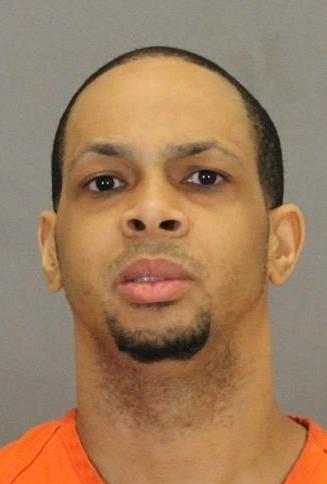
On August 3rd, detectives interviewed Marvin at the Omaha police station. At first, Marvin was calm and answered all of their questions. But it wasn’t long before he became belligerent, slamming his fists on the table and hitting a wall. He yelled at the officers, threatening to beat them and break their noses. When he smashed his head on the room’s thermostat, it took five officers to subdue him and place him in handcuffs. Marvin Young was arrested and charged with three counts of child abuse by neglect and three counts of disturbing the peace, plus an additional charge of criminal mischief for the damage he caused to the police station’s interview room.
While Marvin sat in jail, investigators were focused on finding Camisha. In a statement to the press, the police department stated that the case would have constant attention and dedicated resources. “We are gravely concerned about [Camisha Hollis’] well-being.”
Camisha’s family organized a community search of several parks in and around Omaha, with dozens of local residents volunteering their time. Martha told KMTV that the support from the community was helping her stay strong. “It’s very helpful, it’s what’s keeping me going, a lot of people are concerned about [Camisha’s] wellbeing.”
Meanwhile, Omaha police were following a lead that took them to Schilling Wildlife Management Area south of the city. On August 5th, helicopters circled the 1500-acre park as rescue boats combed the Missouri River. But after hours of searching, they came up empty-handed.
However, detectives driving along Douglas Street in downtown Omaha that same afternoon made a lucky discovery – Camisha’s red 2018 Hyundai Elantra was sitting in a hotel parking lot. The backseat of the car was soaking wet as if someone had tried to clean it, and there was evidence of blood in several spots, including on one of the seatbelts. Camisha’s purse was in the trunk.
Omaha police issued a public statement requesting surveillance video from homes and businesses that might have captured Camisha’s car in the area. When examining the footage, they saw the car pull into the hotel parking lot on the afternoon of April 2nd. Marvin Young got out of the driver’s seat. He put a woman’s purse in the trunk and then walked away holding a plastic bag.
Investigators were convinced that Marvin had harmed Camisha, but they still didn’t have enough evidence to make an arrest. While they built their case, Marvin went to court for a preliminary hearing regarding the child abuse charges. Camisha’s family sat in the courtroom wearing pink and purple ribbons – pink for Camisha’s favorite color and purple for domestic violence awareness. The judge ruled that Marvin would stand trial, and the family was relieved to get a chance to see justice. Martha told reporters, “We believe that all of this is going to be resolved and we’re going to find Camisha and justice is going to be served for Camisha. That’s all we want.”
Omaha Police spokesman Micheal Pecha assured the media that they were still actively investigating Camisha’s disappearance. “We are continually working this case and are making progress. It would be inappropriate to give updates during the investigation because there are certain facts that only the suspect would know.”
Months passed, and Camisha’s family continued to wait for answers. They celebrated her 35th birthday with a balloon release, sharing memories of Camisha and praying for her to come home.
In December, eight months after Camisha disappeared, the Omaha Police Department officially reclassified her missing persons case to a homicide investigation. They made another public plea for information, hoping to drum up new leads.
Finally, in June of 2019, Marvin Young was charged with first-degree murder in the death of Camisha Hollis. In a court hearing, the Douglas County Attorney laid out the evidence before a judge, painting a picture of a toxic, abusive relationship that ended in death.
During the investigation, police learned that Camisha had documented Marvin’s abuse for several years. Pictures on Camisha’s camera roll showed injuries on her face, and there were audio recordings from 2015 in which Marvin Young was heard threatening to kill everyone in the house, including their children.
It was also discovered that Camisha had contacted the police several times in the past. In December of 2017, she told them that Marvin had beaten her unconscious that summer. When she came to, she found herself in the bathtub with the water running. She had been afraid he was trying to kill her. A few weeks later, Camisha drafted an email saying that if anything happened to her, Marvin was responsible. She never sent the email.
Camisha’s mother Martha testified that she had known about Marvin’s abuse and had tried to help Camisha get away from him. But Marvin had controlled and manipulated Camisha, using their daughters as leverage.
The County Attorney also laid out the timeline leading up to Camisha’s murder and the evidence that supported it. Just after midnight on April 2nd, after the two youngest girls had gone to sleep, Marvin Young called 911 and said that he was being threatened by Martha Hollis and was concerned that she would assault him. But when an officer arrived at the house at 12:30am, Marvin said that Martha had left through the garage door. The officer testified that Camisha had seemed confused by the whole situation – her mother hadn’t even been at the house. The officer noted that she hadn’t seen any injuries on Camisha or Marvin, so she just took the report and left.
Around 1:20am, Camisha posted on her Facebook page – a status update with an “upset” emoji. Camisha was generally a private person online, rarely sharing anything personal, so immediately, several friends reached out, asking her what was wrong. One of those friends was a man Camisha had been seeing for the past few months. Camisha did not reply to the messages.
At 1:57am, the home security camera took a picture of Camisha sitting on the couch with her cell phone. The camera wasn’t always recording – it only took pictures when the outside doors were opened – so the timestamp indicated that either the front door or the garage door had been opened at that moment, presumably by Marvin.
At 2:20am, Camisha’s Facebook activity showed a search for the name of the man she was seeing.
At 2:35am, Marvin’s cell phone data showed him leaving the house and driving around town for approximately 45 minutes before returning home. This aligned with his daughter’s statement about Marvin saying he would take her out for ice cream but never actually getting any.
At 3:47am, the security camera was moved and pointed at the ground. Thirty minutes later, the door leading from the basement to the garage opened, and the camera attempted to take a picture; however, all it could capture was the floor of the home.
At 5:11am, Marvin’s cell phone tracked him leaving the house and traveling to Walnut, Iowa, a tiny town 50 miles east of Omaha. He then returned to the city and later drove south to Plattsmouth. Just before 1:00 in the afternoon, Camisha’s red Hyundai Elantra was seen entering the Schilling Wildlife Management Area. It left thirty minutes later.
The County Attorney argued that Marvin tried to clean up the evidence before leaving the car in downtown Omaha later that day, but Camisha’s blood was found in the backseat and on a seatbelt. Her blood was also found in the basement and garage at the house.
During a police interview, Marvin Young had said that while Camisha could afford to lose him, he couldn’t afford to lose her. Prosecutors believed that when Camisha told him to get out of the house, he was angry. When he found out she was seeing someone else, he was enraged. When she tried to fight back, he killed her. Then he dumped her body in the Missouri River and tossed her cell phone in a field.
In March of 2022, just three weeks before his trial was scheduled to begin, Marvin Young took a deal, pleading no contest to manslaughter. Prosecutors believed it was a chance to get justice without asking three young children to testify against their father. County Attorney Brenda Beadle told the press, “It’s a measure of justice. True justice would bring Camisha back to the kids — to her mom, sister, and friends. You can never get real justice in that sense.”
Marvin Young was sentenced to 23 years in prison for manslaughter, three charges of child abuse, and one charge of evidence tampering. He will be eligible for parole in 2029.
In March of 2025, seven years after she disappeared, Camisha Hollis was declared legally dead. Her family has worked hard to keep her memory alive. Camisha’s eldest daughter graduated from high school in 2026, marking the milestone without her mother. At a community event organized by the non-profit I Be Black Girl, she reminded those present that each missing person is important. “When you see a missing person on the news, it might be a total stranger to you. But… they’re daughters, they’re sons, they’re grandmothers, they are somebody to somebody.”
I Be Black Girl’s Bring Her Home campaign is dedicated to raising awareness of the epidemic of missing Black women and children across Nebraska. Camisha’s case inspired them to lobby for Legislature Bill 751, which requires the state to conduct a study on how cases of missing Black women and children are reported and investigated. Executive director of the Nebraska Commission on African American Affairs Mogien Boyd said, “For too long, families have been navigating inconsistent systems. This law begins to change that.”
Camisha Nicole Hollis was a daughter, a sister, a mother, and a friend. She was bright and kind and loved with her whole heart. She was on the verge of taking back her life, of building a better future for herself and her children. Her mother Martha hopes that her life will make a difference for other women. “I hope young ladies that maybe are in domestic violence [situations] would look at my daughter’s story and what she went through and [how] she didn’t make it out… Maybe she could just touch one, if one young person can change from that.”
If you or someone you know is in an abusive relationship, please contact the National Domestic Violence Hotline at 1-800-799-7233 or text START to 88788. Help is free and confidential. You don’t have to suffer alone.